































.bmp)















.bmp)
 MOSCOW-On a talk show last autumn, a prominent political analyst named Mikhail Delyagin offered some tart words about Vladimir Putin. When the program was televised, Delyagin was not.His remarks were cut and he was digitally erased from the show, like a disgraced comrade airbrushed from an old Soviet photo. (The technicians may have worked a bit hastily; they left his disembodied legs in one shot.)Delyagin, it turned out, has for some time resided on the so-called stop list, a roster of political opponents and other critics of the government who have been barred from television news and political talk shows by the Kremlin.The stop list is, as Delyagin put it, "an excellent way to stifle dissent."It is also a striking indication of how Putin has relied on the Kremlin-controlled television networks to consolidate power, especially in recent elections.Opponents who were on television a year or two ago all but vanished during the campaigns, as Putin won a parliamentary landslide for his party and then installed his protégé, Dmitri Medvedev, as his successor. Putin is now prime minister but is still widely considered Russia's leader.Onetime Putin allies such as Mikhail Kasyanov, his former prime minister, and Andrei Illarionov, his former chief economic adviser, disappeared from view. Garry Kasparov, the former chess champion and leader of the Other Russia opposition coalition, was banned, as were members of other parties. Even the Communist Party, the only remaining opposition party in Parliament, says its leaders are kept off television.
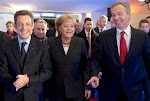
And it is not just politicians. Televizor, a rock group whose name means television set, had its booking on a St. Petersburg television station canceled in April, after its members took part in an Other Russia demonstration.When some actors cracked a few mild jokes about Putin and Medvedev at Russia's equivalent of the Academy Awards in March, they were expunged from the telecast.Political humor in general has been exiled from television here. One of the nation's most popular satirists, Viktor Shenderovich, once had a show that featured puppet caricatures of various politicians, including Putin. It was canceled in Putin's first term and Shenderovich has been all but barred from television.Senior government officials deny the existence of a stop list, saying that people hostile to the Kremlin do not appear on television simply because their views are not newsworthy.Journalists said in interviews that they did not believe that the Kremlin kept an official stop list, but that the networks keep their own and that they all operate under informal guidelines - an understanding of the Kremlin's likes and dislikes.Vladimir Pozner, host of "Times," a political talk show on the top national network, Channel One, said the pressure to conform to Kremlin dictates had intensified over the last year and had not eased up even after the campaign."The elections have led to almost a paranoia on the part of the Kremlin administration about who is on television," said Pozner, who is president of the Russian Academy of Television.In practice, Pozner said, he tells Channel One executives who he wants to invite on the show and they weed out anyone they think is persona non grata."They will say, 'Well, you know we can't do that, it's not possible, please, don't put us in this situation. You can't invite so and so' - whether it be Kasparov or Kasyanov or someone else," Pozner said.He added: "The thing that nobody wants to talk about is that we do not have freedom of the press when it comes to the television networks."Vladimir Solovyov,(picture left,center) another political talk show host, said Pozner was complaining only because his ratings were down and he was looking for someone to blame if his program was canceled. Solovyov, a supporter of Putin, said he had never been bullied by the Kremlin.But last year, his show, "Throw Down the Gauntlet," regularly featured members of opposition parties. This year, the only politicians to appear have been leaders of Putin's party, United Russia, and an allied party. Asked why he had not invited opposition leaders lately, Solovyov said, "No one supports them. They have nothing to say."
Vladimir Ryzhkov, a liberal and former member of Parliament who used to appear on the show, said Solovyov was covering up for the Kremlin."He lies, of course," Ryzhkov said. "My programs with him were among the highest rated programs of any in the history of his show."Ryzhkov said he is usually allowed to appear in lengthy segments on only one major channel: Russia Today, the English-language news station that the Kremlin established to spread its viewpoint around the world. "I can go on Russia Today only because they want to make it seem that in Russia there is freedom of the press," he said.
To read more go to:
As in the days of Noah...

