















































































.bmp)




























.bmp)
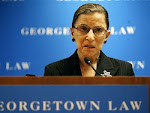
 WASHINGTON - U.S. executions are all but sure to resume soon after a nationwide halt, cleared Wednesday by a splintered Supreme Court that approved the most widely used method of lethal injection.Virginia immediately lifted its moratorium; Oklahoma and Mississippi said they would seek execution dates for convicted murderers, and other states were ready to follow after nearly seven months without an execution in the United States.Voting 7-2, the conservative court led by Chief Justice John Roberts rebuffed the latest assault on capital punishment, this time by foes focusing on methods rather than on the legality of the death penalty itself. Justice John Paul Stevens voted with the majority on the question of lethal injections but said for the first time that he now believes the death penalty is unconstitutional.The court turned back a challenge to the procedures in place in Kentucky that employ three drugs to sedate, paralyze and kill inmates. Similar methods are used by roughly three dozen states.Death penalty opponents said challenges to lethal injections would continue in states where problems with administering the drugs are well documented.The case decided Wednesday was not about the constitutionality of the death penalty generally or even lethal injection. Instead, two Kentucky death row inmates contended that their executions could be carried out more humanely,with less risk of pain.The inmates "have not carried their burden of showing that the risk of pain from maladministration of a concededly humane lethal injection protocol, and the failure to adopt untried and untested alternatives, constitute cruel and unusual punishment," Chief Justice John Roberts said in an opinion that garnered only three votes. Four other justices, however, agreed with the outcome.Roberts also suggested that the court will not halt scheduled executions in the future unless "the condemned prisoner establishes that the state's lethal injection protocol creates a demonstrated risk of severe pain."States can avoid this risk by using the three-drug procedure approved in the Kentucky case, Roberts said.Justices Ruth Bader Ginsburg and David Souter dissented. Executions have been on hold since September, when the court agreed to hear the Kentucky case. The justices stepped in to halt six executions, and many others were put off because of the high court's review.Forty-two people were executed last year out of more than 3,300 people on death rows across the country. Wednesday's decision was announced with Pope Benedict XVI, a prominent death penalty critic, in Washington and the court's five Catholic justices-Roberts, Samuel Alito, Anthony Kennedy, Antonin Scalia and Clarence Thomas-headed to the White House for a dinner in his honor. All five supported the lethal injection procedures.The court separately heard arguments Wednesday on the constitutionality of the death penalty for people convicted of raping children. A decision in that case is expected by late June.The argument against the three-drug protocol is that if the initial anesthetic does not take hold, the other two drugs can cause excruciating pain. One of those drugs, a paralytic, would render the prisoner unable to express his discomfort.The Kentucky inmates wanted the court to order a switch to a single drug, a barbiturate, that causes no pain and can be given in a large enough dose to cause death.At the very least, they said, the state should be required to impose tighter controls on the three-drug process to ensure that the anesthetic is given properly.Ginsburg, in her dissent, said her colleagues should have asked Kentucky courts to consider whether the state includes adequate safeguards to ensure a prisoner is unconscious and thus unlikely to suffer severe pain.Stevens, while agreeing with Wednesday's outcome, said the decision would not end the debate over lethal injection."I am now convinced that this case will generate debate not only about the constitutionality of the three-drug protocol, and specifically about the justification for the use of the paralytic agent, pancuronium bromide, but also about the justification for the death penalty itself," Stevens said in an opinion in which he said for the first time that he believes the death penalty is unconstitutional.
To read more go to:
http://news.yahoo.com/s/ap/20080416/ap_on_go_su_co/scotus_lethal_injection;_ylt=AhzmDc1C7ykyJOiYQMRxuoSs0NUE
As in the days of Noah...

