








































































.bmp)


























.bmp)
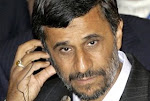
 TEHRAN-{{{{{Iran will not back down in a nuclear dispute with the West and is not interested in talks with the United States,}}}}} its president said on Tuesday ahead of a previously unannounced visit by Russia's foreign minister.Mahmoud Ahmadinejad, speaking hours before he was due to meet Russia's Sergei Lavrov in Tehran, dismissed U.S. offers of broader negotiations between the two foes if Iran first halts atomic work which Washington fears is aimed at building bombs.[[[[["This nation will not negotiate with anyone over its obvious and legal rights,"]]]]] Ahmadinejad told student members of the Basij religious militia, the official IRNA news agency reported.[[[["We are not even interested in negotiating with you (the United States) and the Iranian nation does not need America."]]]]U.S. President George W. Bush said earlier this month that Washington had made it clear to the Islamic Republic that negotiations were possible if it shut down its nuclear program, something Iran has consistently refused to do.In Moscow, a spokesman said Lavrov would discuss nuclear and bilateral issues during a working visit to the Iranian capital. Iranian officials said his talks with Ahmadinejad would start at 1600 GMT and that no news conference was planned afterwards.Russia says dialogue, not more penalties or military action as mooted in the United States, is the way to ease an escalating international stand-off over Tehran's atomic ambitions.The Lavrov visit coincides with a crucial round of talks in Tehran between officials from Iran and the U.N. International Atomic Energy Agency watchdog on implementing an August deal meant to resolve questions about past secret Iranian activity.The current talks were intended to clarify Iran's efforts to develop centrifuges which enrich uranium.IAEA Director Mohamed ElBaradei will report to the agency's 35-nation board of governors in mid-November. If Iran has not answered sensitive questions by then, Western powers say they will move to have harsh U.N. sanctions adopted against Iran.
TIME RUNNING SHORT
"We are now collecting remaining information and doing the assessment for the report," said a diplomat close to the IAEA. "There's little time for more meetings. But we have a number of issues beyond centrifuges so we might still have to meet again."Tension has been rising between Iran and the United States, which has not ruled out military action if diplomacy fails to stop Iran's sensitive atomic work.But visiting Tehran two weeks ago, President Vladimir Putin said Russia would not accept military strikes against Iran.Putin, the first Kremlin leader to travel to Iran since World War Two, has also criticized new U.S. sanctions on Tehran.The United States last week broadened its own longstanding sanctions to include part of the Revolutionary Guards and accused the most important wing of Tehran's military of spreading weapons of mass destruction.In Beijing, a Foreign Ministry spokesman underscored China's stance that a negotiated settlement was still viable. Like Russia, it is a veto-wielding U.N. Security Council member."China has always maintained that in international relations sanctions should not be rashly applied." the spokesman said.He was responding to the message of visiting Israeli Foreign Minister Tzipi Livni, who sought to persuade China to back tougher economic restrictions against Israel's archfoe.The U.N. Security Council has already imposed two sets of limited sanctions on Iran for its refusal to halt enrichment, a process to make fuel for nuclear power plants that can also, if refined further, provide material for bombs.Ahmadinejad made clear Iran would defy Western pressure:"The enemies have retreated step by step and the Iranian nation is getting closer to the peaks of glory step by step ... Today, from our viewpoint, the nuclear issue has ended."
As in the days of Noah....

