

















































































.bmp)





























.bmp)
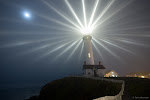
 TUCSON,Ariz.-The world's first and only known therapeutic moonlight reflector, a 30-ton, 50-foot tall collection of parabolic mirrors in Arizona’s Sonoran Desert, has drawn hundreds of people to the site outside Tucson in hopes of curing their ailments, according to Richard Chapin, its inventor.Chapin's company, Interstellar Light Applications, has poured $2 million into the venture it believes has "unlimited benefits for the medical, agricultural and industrial fields," according to its Web site.Launched in January, the company said the five-story structure spans 60 feet and is capable of a 360-degree rotation."People are coming from around the country to experience the magnificent collection instrument," Chapin said.Some visitors said they've seen a lightening of age spots on their hands, decreases in achy joints and muscle pain, or lowered depression levels in the wake of the exposure.A Tucson firefighter subjected to the intense moonlight said he credited his experience as his motivation to lose 95 pounds, according to a company news release.Another believer, Eric Carr, who suffered asthma, said he was skeptical the first time he tried it. But after spending a few minutes basking in a moonbeam, he said his life changed."I just noticed I was breathing a lot easier," Carr said."Hopefully these differences in reds, and yellows-you have all the colors of the spectrum-will activate parts of the body and make a healthful difference,"Chapin said.Chapin said extensive research has shown that different wavelengths of light have beneficial therapeutic effects at the cellular level.Different tissue and cell types in the body each have their own particular light absorption dispositions- they will only absorb light of a specific wavelength, the company said.Different frequencies of light have distinct benefits and applications,ranging from treating problems such as wounds, scars and infections to arthritis and acupuncture, the company said.Not everyone is buying it. "Lunacy comes from the world 'lunar,'" one skeptic said."I think it sounds nuts to me, frankly," she said.The Interstellar Light Collector is located on unoccupied desert land 15 miles west of Tucson and 22 miles east of the Kitt Peak National Observatory. The location was specially selected to allow for maximum observation availability and light intensity, according to the company.
As in the days of Noah...

